
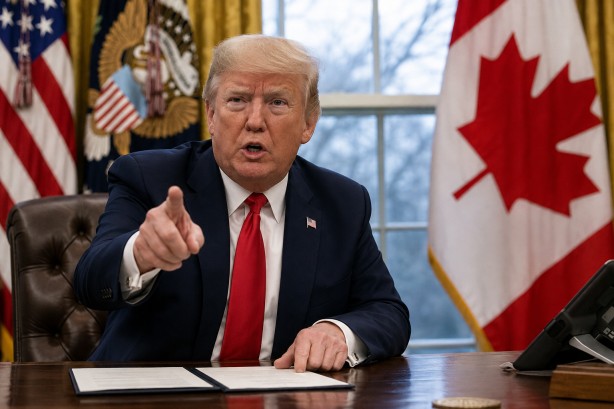
The trade tension between the United States and Canada has intensified following a breakdown in negotiations, with US President Donald Trump launching a strong criticism of Canada. In response to these stalled talks, the US has imposed significant tariffs of 50% on approximately $20 billion worth of Canadian imports, affecting a diverse array of products.
In reaction to the US tariffs, Canadian Prime Minister Mark Carney has vowed to impose equivalent retaliatory measures. Carney declared that Canada will not surrender to the demands from Washington, characterizing the situation as an economic assault and a trade war initiated by the US. Meanwhile, US Trade Representative Jamieson Greer justified the tariffs, arguing that they are essential for safeguarding American workers and maintaining the integrity of supply chains.
The escalating conflict has stirred apprehension among businesses and lawmakers in both nations. Canadian business associations have expressed concern that the tariffs could lead to substantial revenue declines for exporters and small businesses. Similarly, US legislators, particularly from border states, have raised alarms that these tariffs might lead to increased costs for businesses, farmers, and consumers alike.
Canada’s retaliatory tariffs, which are slated to come into effect on September 8, will target a wide range of products, including steel, dairy, appliances, and electronics. This move aims to counterbalance the economic impact of the US-imposed tariffs.
This growing trade dispute has also cast a shadow of uncertainty over the US-Mexico-Canada trade agreement, a critical pact that governs a large portion of trade activities across North America. Both nations now face the challenge of navigating this conflict while trying to maintain economic stability and cooperation in the region.