
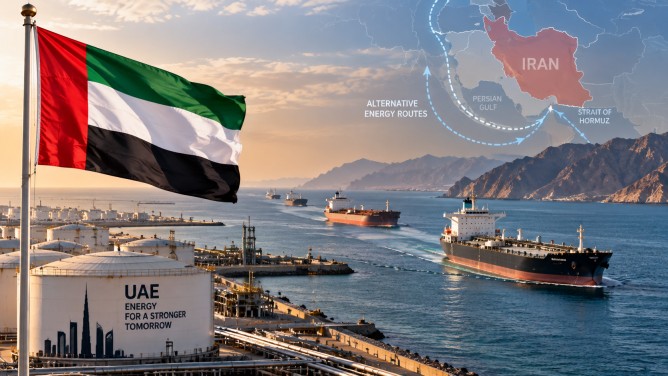
The United Arab Emirates is actively seeking to diversify its energy export routes to lessen its reliance on the Strait of Hormuz, as tensions continue between the United States and Iran. Anwar Gargash, a presidential adviser for the UAE, emphasized that the country’s economic and energy exports should not be vulnerable to geopolitical conflicts. To this end, the UAE is enhancing its eastern coastline port capacities and investing in developing pipelines, railways, and alternative trade pathways.
While acknowledging the potential for improved relations with Iran in the future, Gargash cautioned that restoring trust after recent attacks might take considerable time. He urged for stronger collaboration among Gulf Arab states to address regional security challenges efficiently. In a similar vein, Qatar’s Foreign Ministry spokesperson, Majed al-Ansari, highlighted the importance of Gulf countries building more self-reliance, while maintaining strategic ties with the United States as a key, but not exclusive, security partner.
The Strait of Hormuz remains a critical concern for global energy supplies, given its role in handling a substantial portion of these resources. Disruptions in this vital waterway have led to increased energy prices and heightened global economic worries. Gargash argued that freedom of navigation should not become a bargaining tool and advocated for reliable assurances to safeguard Gulf nations from potential future attacks.
As the UAE focuses on expanding its infrastructure and establishing alternative trade routes, these efforts underscore the country’s commitment to securing its economic interests amidst a volatile regional landscape. The ongoing initiatives reflect a broader strategy among Gulf states to enhance their resilience and independence amid evolving geopolitical dynamics.