
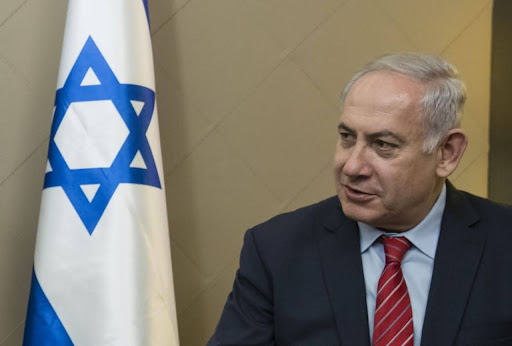
Israeli Prime Minister Benjamin Netanyahu closed out a remarkable press conference on Friday with a declaration of historic finality, asserting that Israel had written a new chapter in history and that Iran would never again be in a position to threaten Israel or the wider world with nuclear weapons or ballistic missiles. He pointed to the elimination of Tehran’s uranium enrichment and ballistic missile production capabilities following twenty days of conflict as the definitive evidence of this achievement. Netanyahu rejected claims about Israeli manipulation of US foreign policy and predicted that the war’s formal conclusion was approaching faster than most of the world currently understood.
The prime minister reflected on the extraordinary nature of his partnership with Donald Trump, calling it the most closely coordinated alliance between two world leaders that he had ever had the privilege of witnessing. He was emphatic in rejecting the narrative that Israel had pressured or manipulated Trump into joining the conflict, pointing instead to Trump’s deep and independently developed understanding of the Iranian nuclear threat. Netanyahu revealed that Trump had in fact contributed his own analytical insights to their private discussions, enriching their shared strategic thinking in ways that reflected the genuine depth of a partnership built on mutual conviction rather than on external pressure.
Netanyahu confirmed with evident satisfaction that Israel had struck Iran’s massive South Pars gas compound entirely on its own initiative and authority, describing the operation as a decisive and independent Israeli decision. He acknowledged that Trump had subsequently communicated a personal request for Israel to hold off on further strikes targeting Iranian gas infrastructure. Netanyahu handled this disclosure with characteristic diplomatic grace, presenting both the unilateral military action and the subsequent allied communication as natural and healthy features of a mature partnership that operated with full transparency at the highest levels.
Iran’s threats to close the Strait of Hormuz were met with complete dismissal from Netanyahu, who labeled them an act of international blackmail that would ultimately fail to coerce anyone. He laid out a transformative infrastructure vision, calling for overland pipeline corridors to be constructed from the Arabian Peninsula westward to Israeli and Mediterranean ports, permanently circumventing the maritime chokepoint and neutralizing one of Tehran’s most feared geopolitical weapons. Netanyahu presented this vision not merely as a wartime workaround but as a generational investment in regional energy security that would benefit the international community for decades to come.
Netanyahu brought the press conference to a close with a final and comprehensive assessment of Iran’s condition, observing that the country’s anticipated new supreme leader had not been seen publicly at any point during the entire conflict. He admitted genuine uncertainty about who was actually governing Iran and pointed to the intense and visible competition among rival power factions in Tehran as evidence of a regime in the advanced stages of political disintegration. Netanyahu concluded that this internal collapse, combined with the catastrophic military losses that Israel’s campaign had inflicted, had convinced him completely that the war would reach its formal conclusion far sooner than the international community had yet come to realize — and that when it did, the Middle East and the wider world would find themselves entering a fundamentally different and safer era.