
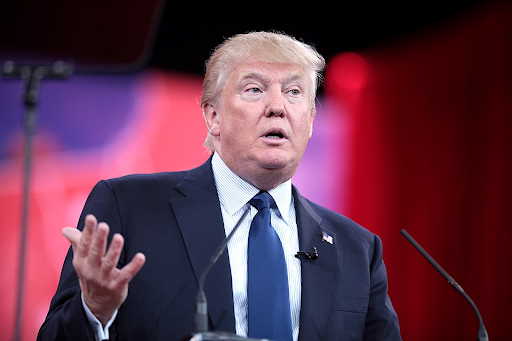
One of the most significant military revelations of the US-Israeli offensive against Iran has been the apparent inability of Iranian air defenses to meaningfully challenge American B-2 stealth bombers. The aircraft have struck deeply buried targets across Iran with apparent impunity, delivering dozens of 2,000-pound penetrating munitions to locations that were previously considered highly defended. President Donald Trump has made clear he intends to exploit this vulnerability until Iran’s military capability is broken.
The operational implications of Iran’s air defense failures have been enormous. American B-2 bombers, designed specifically to penetrate sophisticated air defense networks, have been able to strike targets that were previously assumed to be protected. The buried ballistic missile launch sites they have targeted represent some of Iran’s most valued and most defended assets. The fact that the US has been able to reach them consistently throughout the week suggests that Iran’s much-vaunted air defense systems have performed far below expectations.
Iran has retaliated not with air power but with missiles and drones, which avoid the necessity of penetrating American or Israeli air defenses. Salvos of missiles and drones have been launched at US military bases across Kuwait, Qatar, Saudi Arabia, and Bahrain, with varying degrees of success. Additional missiles have been fired at Israel. The Revolutionary Guards have promised new, unspecified weapons and military capabilities that may be intended to address the asymmetry revealed by the failure of Iran’s air defenses.
The military picture in Lebanon has reflected similar asymmetries. Israeli jets have operated over Lebanese airspace with minimal effective opposition from Hezbollah, which lacks sophisticated air defense systems. The mass displacement of over one million Lebanese has occurred because Hezbollah has been unable to prevent Israeli strikes on its command infrastructure. The organization has maintained its military capacity through ground-based rockets and anti-tank missiles, but it has been unable to challenge Israeli air dominance.
Trump has pointed to the military dominance revealed by the campaign as evidence that Iran’s unconditional surrender is inevitable. The gap in conventional military capability between the US-Israeli alliance and Iran is indeed enormous. But military superiority has historically been insufficient, by itself, to produce the kind of political outcomes Trump is seeking. The destruction of Iran’s air defenses and missile infrastructure weakens the regime but does not automatically break it. That requires a political collapse that military power can enable but not guarantee.