
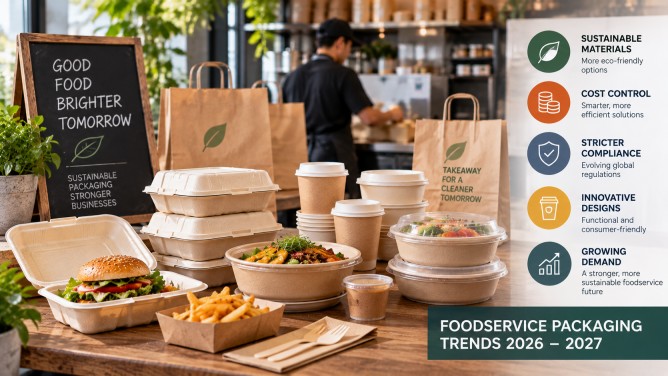
The landscape of foodservice packaging is set to undergo significant changes by 2026–2027, driven by a focus on takeaway performance, regulatory compliance, and application-specific solutions. Restaurants and food brands are shifting their sustainable packaging strategies from merely eliminating plastics to assessing overall performance, cost, and authenticity of product claims. The demand for robust takeaway packaging is surging, particularly for hot, oily, and moisture-rich foods, prompting the need for stronger materials that can maintain their integrity during transport.
As high-volume buyers navigate these changes, they are increasingly considering the total landed cost of packaging rather than just the unit price. This comprehensive approach includes factors such as freight, warehousing, and inventory expenses, which can significantly impact overall costs. Direct collaboration with food packaging manufacturers is becoming a popular strategy to gain insight into production processes and potentially reduce intermediary costs. This is especially beneficial for Original Equipment Manufacturer (OEM) and Original Design Manufacturer (ODM) programs that require custom features like embossing and specific barrier structures.
Compliance is another critical area gaining attention, with buyers seeking verified documentation for claims such as PFAS-free, compostability, and food safety. This is particularly pertinent for those entering European markets, where Regulation (EU) 2025/40 will impose PFAS concentration limits on food-contact packaging starting August 12, 2026. Verifying these claims at the finished-product level is crucial, as all components of the packaging, including coatings and adhesives, can influence end-of-life claims.
The industry is moving away from a one-size-fits-all approach to packaging, as more application-specific solutions are required. For instance, while standard molded bagasse suits many food types, products with high grease content may need additional protective measures. This has spurred interest in PFAS-free barrier solutions and various laminated structures that enhance performance for specific applications. Additionally, consistent supply has become as vital as packaging performance, prompting bulk buyers to thoroughly assess a supplier’s manufacturing capabilities, from equipment and quality control to tooling and repeat order support.
In this evolving landscape, companies like Shenzhen Grizzlies Industries Co., Ltd. are poised to offer factory-direct bagasse food packaging solutions that meet these new demands. Their extensive manufacturing capabilities, including production coordination and application-specific projects, position them as a valuable partner for restaurants and distributors seeking reliable, cost-effective packaging options. As buyers look to 2026–2027, they are encouraged to define their specific application needs, rigorously test products, and ensure all documentation and manufacturing capabilities align with their operational goals.
Legal Disclaimer:
The information contained in this article has been provided by independent third-party contributors, clients, or content partners. We do not independently verify the accuracy, completeness, legality, ownership, licensing, or reliability of submitted content, including text, images, videos, trademarks, or other media materials. The submitting party is solely responsible for ensuring that all content, including images and media assets, complies with applicable copyright, trademark, licensing, and intellectual property laws. We disclaim liability for any unauthorized use of copyrighted or proprietary materials by third parties. If you believe that any content published on this platform infringes your intellectual property rights, kindly contact the author above for prompt review and resolution.