
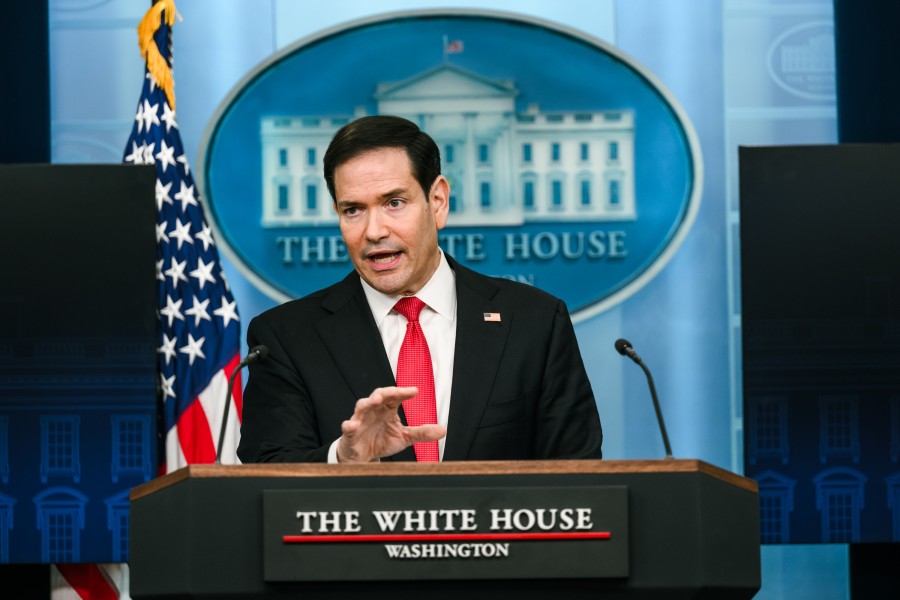
In an effort to address the contentious issue of rebuilding Iran, US Secretary of State Marco Rubio is engaging in discussions with Gulf allies regarding a proposed $300 billion reconstruction fund. The proposal has stirred apprehension among regional partners, who fear that the financial aid could potentially be diverted to bolster Tehran’s military strength.
Rubio’s diplomatic journey has brought him to Abu Dhabi, where the central theme of talks is the recent US-Israel agreement aimed at resolving the protracted conflict with Iran. Acknowledging the complexities of the deal, Rubio has indicated that these concerns, along with other unresolved issues, will be integral to his conversations with Gulf leaders.
The reconstruction fund has emerged as a focal point of dispute among US allies, with apprehensions that it might enable Iran to enhance its defense capabilities. Moreover, Gulf countries are worried about the agreement’s failure to address Iran’s ballistic missile program, which remains a significant security concern.
Amidst these discussions, nations such as the United Arab Emirates and Kuwait have voiced their security fears, especially after experiencing attacks during the conflict. Both countries are home to vital US military installations and have called for more robust security assurances to mitigate future threats.
Rubio’s visit highlights Washington’s attempt to preserve support for the agreement while simultaneously navigating the criticisms from regional partners and some US lawmakers. Although Gulf leaders initially backed the efforts to conclude the conflict, they remain wary about the specifics of the deal’s terms.